
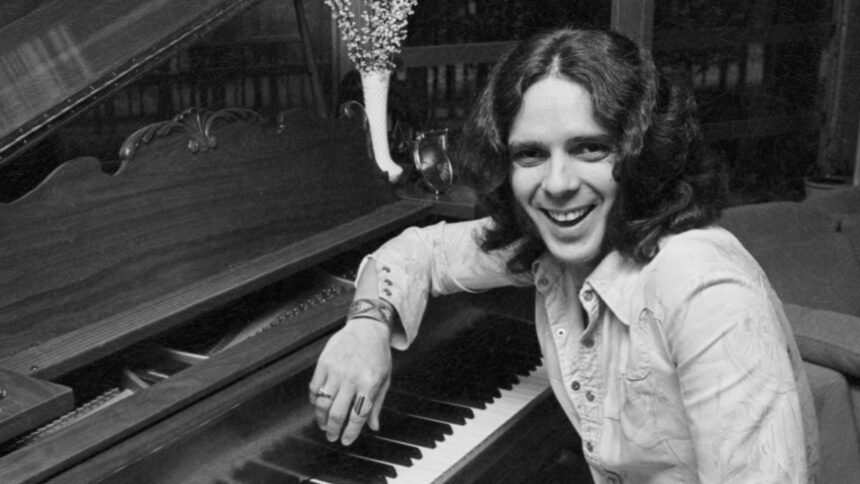
Bobby Whitlock, the singer-keyboardist and co-founder of ‘70s blues-rock band Derek & the Dominos alongside Eric Clapton, has died, according to his manager Carol Kaye. In a statement to Variety, Kaye shared that Whitlock died earlier this morning following a cancer diagnosis. He was 77.
Born in Memphis, Tennessee, on March 18, 1948, Whitlock gravitated towards music at a young age, both as a fan and a student interested in learning the keyboard and organ. As a teenager, Whitlock started befriending artists in the Stax Records orbit, including Booker T. & the M.G.’s, the Staples Singers, Albert King, and others, eventually weaseling his way into their circuit by way of that respectful admiration. After he earned his first proper recording credit performing handclaps on Sam & Dave’s single “I Thank You,” he signed to Stax—making him the first white artist to join their roster—and played organ regularly around the local scene, in part with the soul bands Short Cuts and the Counts.
Though Stax mentor Steve Cropper took him under his wing and Donald “Duck” Dunn and Don Nix were planning to produce a pop album by him, Whitlock decided to leave Memphis to pursue music with the rock and soul duo Delaney & Bonnie. He played keys and contributed additional vocals on their two 1969 albums Home and Accept No Substitute. While touring with the duo, Whitlock met numerous musicians that he would collaborate with later on in his career, like Bobby Keys and Jim Price, as well as future Derek & the Dominos members Carl Radle and Jim Gordon. When Delaney & Bonnie opened for Clapton’s supergroup Blind Faith, Whitlock and Clapton crossed paths for the first time. (Looking back on that leg, Clapton would describe Whitlock as “the most energetic sideman I had ever seen.”)
Once Delaney & Bonnie dropped their live album On Tour with Eric Clapton in 1970, Whitlock was eager to test his skills in a new band. He reunited with Clapton, Radle, and Gordon for a quick session before getting an invite to join Clapton on his debut solo album, Eric Clapton, and to accompany George Harrison in the studio as he recorded All Things Must Pass, the late guitarist’s third solo album and first following the Beatles’ breakup. Whitlock contributed heavily to that Billboard No. 1 album, playing organ, piano, harmonium, tubular bells, and backing vocals on most tracks, including the hits “My Sweet Lord” and “What Is Life.”
Upon regrouping, the four musicians started Derek & the Dominos as a blues-rock group focused on forming ideas at a natural pace and reveling in their relaxed friendship. After welcoming guitarist Dave Mason and coming up with their new band name, a rushed idea-turned-bungled onstage introduction, Derek & the Dominos played their first show and then entered the studio in June 1970 to record the singles “Tell the Truth” and “Roll It Over” with Phil Spector. That fall, after Mason’s departure, they hit up producer Tom Dowd to track their debut full-length: the 1970 double album Layla and Other Assorted Love Songs.
Together, Whitlock and Clapton wrote effortlessly romantic blues-rock hits like “Bell Bottom Blues” and “Layla,” the latter a seven-minute sprawler that, belatedly, became a staple of classic rock radio and a highlight of Clapton’s career overall. They only recorded one studio LP together, but it’s since considered to be a classic of the genre for its songwriting and performances – including one from the Allman Brothers Band’s Duane Allman, who brought extensive contributions on lead and slide guitar, although he was not technically a member of the band. Halfway through writing their second album, Derek & the Dominos dissolved in a fit of tension and depression following the death of numerous friends in the months prior; Allman was killed in a motorcycle accident, and Jimi Hendrix died suddenly in his girlfriend’s apartment.
Whitlock’s songwriting ideas continued to flow freely, and he returned to the studio to start his own solo career. He released his self-titled debut studio album in 1972 and followed it with Raw Velvet later that same year. He went on to record four more solo albums, a few live LPs, and a handful of collaborative full-lengths with his partner Coco Carmel. Whitlock also steadily contributed to other artists’ records, including Dr John’s The Sun, Moon & Herbs, Clapton’s The History of Eric Clapton, and Manassas’ Down the Road. Whitlock also famously appeared, uncredited, on the Rolling Stones’ 1972 essential Exile on Main St.
In 2024, Whitlock was awarded a Brass Music Note on Memphis’ own Beale Street Walk of Fame for his work. “My business is to try to conduct myself as a decent person and a gentleman as much as I can, get through this world, navigate through this without making too many waves. But when you make them, make them big – ones to remember,” Whitlock told local paper Everything Knoxville. “I know the role that I’ve been playing in everyone’s music that I was a part of. Because my addition made that music mine as well – whether it’s a Jeff Healy record or whatever. I put my stamp on it.”