

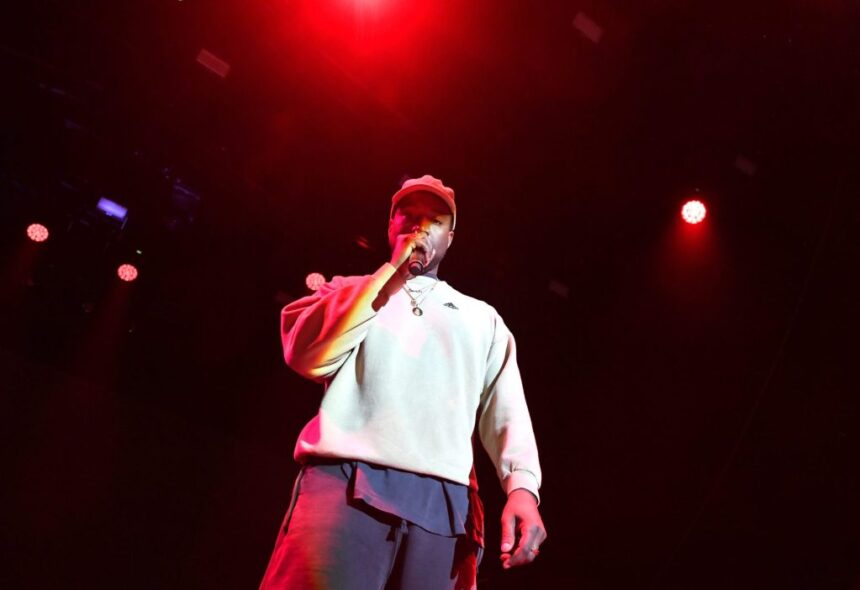
Following a series of concert cancellations in London and Poland, as well as a postponement in France, it appears that Ye’s upcoming performances in the Netherlands will proceed as planned. Despite mounting pressure from members of parliament and various public groups to block the artist—formerly known as Kanye West—from performing due to his history of antisemitic rhetoric, local authorities have maintained that they lack the legal authority to intervene.
The Legal Stance on Cultural Freedom
Ye is currently slated to perform two shows at the Gelredome Stadium in Arnhem on June 6 and June 8. Arnhem Mayor Ahmed Marcouch addressed the controversy in a statement to the Dutch outlet NRC, clarifying that while he personally finds the artist’s past remarks “disgusting,” his office must adhere to the rule of law.
“Members of Parliament have the power to make laws, so instead of constantly posting all kinds of messages on X, they can also limit behavior they deem undesirable by law,” Marcouch explained. He emphasized that the permit application process for the concerts is currently underway and is being evaluated based on standard criteria such as public order and safety, rather than the personal views of the performer.
“Within the framework of the law, the mayor should not pass judgment on the content of a cultural activity. That concerns freedom of expression,” the mayor added. “If the organization meets the requirements of the permit, then we simply have to grant that permit.”
No Legal Basis for Entry Bans
Earlier in April, Dutch Minister Van den Brink echoed this sentiment, noting that there is “no legal basis” to deny Ye entry into the country based on his previous statements. According to reports from RTL News, the minister found no indication that an entry ban would be applicable in this instance.
Mayor Marcouch further clarified that public indignation does not equate to legal authority. “I observe that Members of Parliament want something and call upon the Minister to do something, while the Minister says, ‘I have no legal basis to deny that man entry.’ If the Minister comes to that conclusion after all the indignation and calls from the House, then you shouldn’t start shouting again that someone is not allowed to come,” he stated. “Then you have to create a legal basis so that the Minister can do those kinds of things.”
He concluded by affirming the importance of the constitutional process: “I am also pleased that in our constitutional state, as a citizen, you are not dependent on the arbitrariness of a mayor or any other authority. That the law prevails.”
Context of Recent Cancellations
The situation in the Netherlands stands in contrast to other European markets. Ye was previously denied a travel visa by the U.K. government, resulting in the cancellation of his appearance at Wireless Fest. Similarly, following backlash from French authorities, the artist opted to postpone a June concert in Marseille. Most recently, a representative for the Silesian Stadium in Poland confirmed that a scheduled June 19 performance would not take place.
Despite these hurdles, the artist’s official website continues to list upcoming dates in New Delhi, Istanbul, Italy, Madrid, and Portugal. In the United States, Ye recently returned to the stage with two performances at SoFi Stadium in early April, following the March 28 release of his latest album, Bully, which debuted at No. 2 on the Billboard 200.