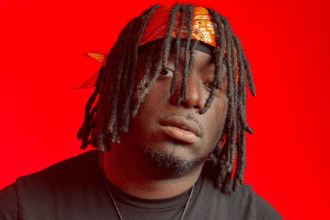


James Garfield Broadnax was executed by lethal injection on April 30 at the Texas State Penitentiary. Broadnax, who was 37, had been serving a sentence for a 2009 double murder conviction, a case that became a focal point in the national conversation regarding the admissibility of rap lyrics as evidence in criminal trials.
As recently as March, the case gained significant attention when prominent artists, including Travis Scott, Young Thug, and Killer Mike, petitioned the Supreme Court to intervene and halt the execution. Despite these efforts, the Supreme Court ultimately declined to hear the appeals, citing the fact that Broadnax had never recanted his initial confession.
The Role of Rap Lyrics in the Courtroom
The legal proceedings against Broadnax and his cousin, Demarius Cummings, stemmed from a 2008 attempted carjacking that resulted in the deaths of Stephen Swan and Matthew Butler. While Broadnax confessed to the crimes, the prosecution’s strategy during the sentencing phase proved pivotal. Prosecutors introduced 40 pages of handwritten rap lyrics found in Broadnax’s vehicle, which the jury used to justify a death sentence over life imprisonment.
In their supporting brief, artists argued that the lyrics were irrelevant to the specific charges and were unfairly used to prejudice the jury. Travis Scott filed a separate brief, characterizing the prosecution’s reliance on the lyrics as a direct violation of constitutional protections regarding creative expression.
Legislative Shifts and the Future of the RAP Act
The controversy surrounding Broadnax’s case mirrors a broader legislative movement. In 2022, both New York and California passed laws restricting the use of creative works, such as song lyrics, as evidence in criminal proceedings. Similar efforts at the federal level, specifically the RAP Act, were reintroduced to Congress in 2023 but have yet to be enacted into law.
The execution of Broadnax serves as a stark reminder of the ongoing tension between artistic freedom and the judicial system, a topic that remains at the forefront of legal and cultural debates across the music industry.